What Is the “BATNA”? The Negotiation Tool Most People Never Properly Use
Where "BATNA" Came From (and Why It's Not Just "Plan B")
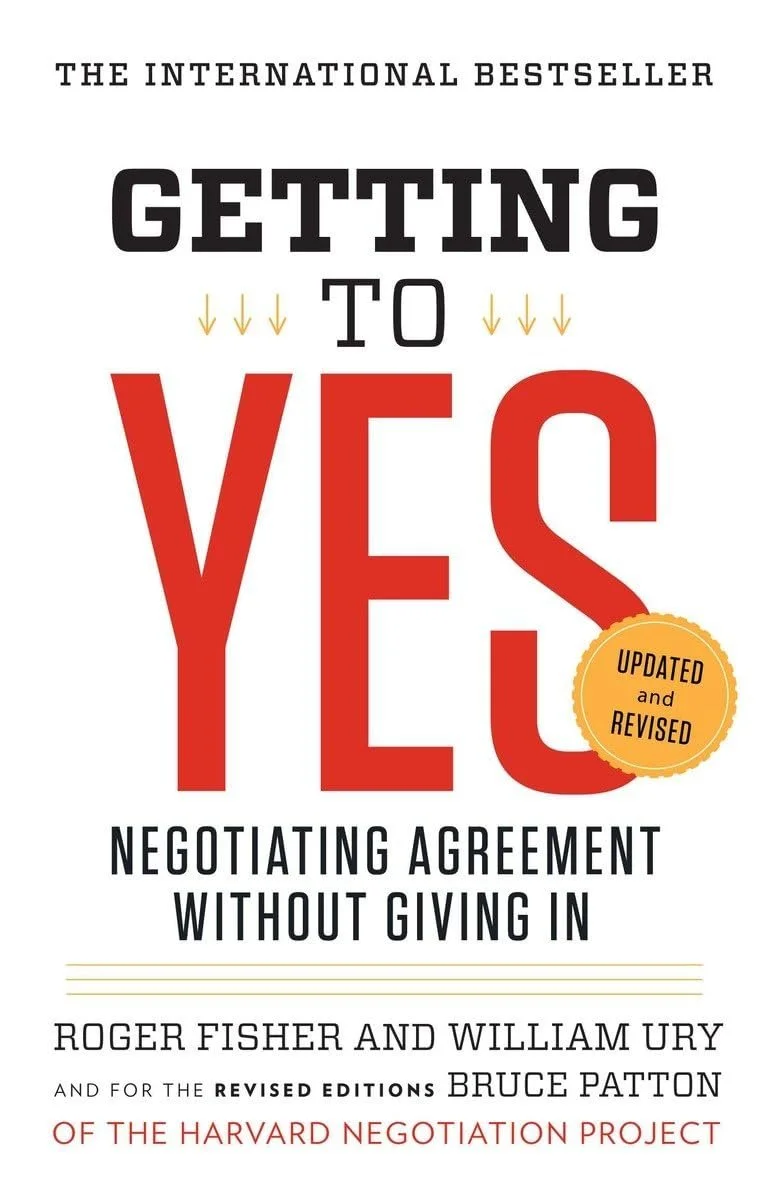
The BATNA, or Best Alternative to a Negotiated Agreement, is a concept that Roger Fisher, William Ury, and Bruce Patton introduced in their book Getting to Yes: Negotiating Agreement Without Giving In. This book is basically considered the negotiation Bible.
“BATNA” is Harvard negotiation jargon for "What's your back-up plan?" But it's more than just a Plan B which is why it’s deserving of its own name.
The difference matters because a weak BATNA doesn't just cost you leverage at the table. It changes how you show up before you even sit down.
A BATNA has deep psychological and strategic impact on your negotiation. Any formal negotiation course will teach the concept of the BATNA and how to consider the BATNA as you prepare for your negotiation.
Why a BATNA Changes Two Things at Once
First, Your Psychology - It Shapes the Way You Show Up

Psychology should not be an afterthought in negotiation.
Your mindset leaks into your tone, your timing, and your willingness to hold silence.
If you listen to my Aspire for More podcast, you’ll know I regularly talk about the mindset and I also cite the research on how mindset work before entering into a negotiation significantly improves outcomes.
Most of what looks like nervousness at a negotiating table is rooted in fear, the quiet belief that this deal is your only shot - so losing it means losing everything - or that just simply asking for what you want is putting your relationship at risk with the other party.

A strong BATNA reduces that fear, which drives most of the bad decisions people make at a negotiating table.
Consider a classic job offer example: if you are negotiating only one job offer, and you NEED that job otherwise you will be unemployed and experience financial hardship, then you do not have a strong BATNA and you will not negotiate that job offer from a position of strength. If you have multiple job offers that are all pretty good and that you’re actually considering, then you will be able to negotiate from strength because if it all falls apart, you have a strong backup plan.
When you actually have a strong alternative, that fear has nothing to attach to.
A pushback from the other side stops feeling like rejection and starts feeling like information.
You're not performing calm.
You're not reciting an affirmation you don't believe.
You're just responding to the room the way anyone would if the outcome genuinely wasn't going to break them.
This is the psychological influence of a strong BATNA.
Second, Your Leverage — It Shifts the Other Side's Behavior

A strong BATNA doesn’t just affect your behavior, it affects the other negotiating party’s behavior as well. If the other party senses you have nowhere else to go, they know exactly how little they need to offer. If they sense you have somewhere else to go, the math changes for them too.
This isn’t because they’re bad, manipulative people - this is often an unconscious shift that happens for them.
A strong BATNA is your walk-away point at work: the line where staying in this deal is worse than leaving it. Once you know that line, "good enough" stops being a feeling you're guessing at and becomes something you can actually check your offer against.
But here's the thing: the leverage doesn't come from having that option in your head. It comes from the other side believing you'd actually use it.
A strong alternative that isn't real, or isn't believed, doesn't move anything.
The moment the other side senses you have somewhere else to go, their offer changes.
This is why signaling your BATNA is incredibly important. (More on that later.)
Real-World Examples of the use of the BATNA

Priya: A Strong BATNA
I worked with a client, Priya, who had two job offers on the table from household-name tech companies.
The moment one of those companies found out she had a competing offer from another household-name tech company, their tone shifted immediately.
Suddenly there was urgency. Suddenly there was room to improve the package that hadn't existed the day before. Her BATNA did the negotiating before she said a word.
Lucia: A Weak BATNA

Compare that to Lucia. She'd just gone through a performance review and gotten a small raise, but then found out that someone she managed was making more than she was.
She went back to her manager to ask for an additional raise. She made a strong case: she was in the top 3% of sales, and it should matter that she was the manager. Her supervisor told her there was nothing more they could do.
I told her what I tell most of my clients in that position: go strengthen your BATNA.
She went out, got an offer from another company, and a few weeks later reopened the conversation with her supervisor. Suddenly, the budget had room after all.
Same ask. Same manager. Same person. The only thing that changed was that her BATNA became real instead of theoretical.
That's one conversation I have with clients: not just about tactics, but about actually doing the uncomfortable thing that changes the outcome.

Why We Resist Strengthening Our Own Leverage
Almost everyone I work with knows that a stronger alternative would change the outcome. But not all actually go and get one.
If you're negotiating a vendor contract, that means actually calling competitors instead of assuming you already know what they'd quote.
If you're negotiating rent, it means touring other units instead of guessing what else is out there.
That is a lot of work. That’s why many resist it.
Do you know anyone who genuinely enjoys sitting through vendor calls, or going to job interviews, or getting quotes for leverage they might not even use?
I don’t either.
There is no shortcut here.
The greatest form of leverage is an offer you actually have in hand. Not a theoretical one. Not a threat you're hoping you'll never have to follow through on.
The BATNA and The Bachelor

Photo courtesy of ABC
Let's take a break from job offers and raises for a second, because there's a version of this playing out on TV.
If you want to see a weak BATNA in its dramatic form, watch The Bachelor.
Twenty-some contestants, who are hyper focused on one person. Nobody has a backup plan. That's the format.
And it's exactly why the tears are so real when someone doesn’t get offered a rose.

Photo courtesy of ABC
Bachelor in Paradise, on the other hand, has new contestants show up on the island every few days.
This means everyone's alternatives are shifting in real time.
Watch how fast their demeanor changes and how they come up with strategies to go to the next round.
Suddenly the person who was "all in" a week ago is a lot more interested in keeping their own options open too.
I wouldn’t call that a character flaw. That's just what happens to your posture the moment your BATNA gets a little more real.
I mention this in a recent podcast episode #33: The Most Underrated and Underutilized Tool in Negotiation: The BATNA(available on Apple Podcasts and Spotify.)
The takeaway is how differently you'd show up in any negotiation, romantic or professional, if you weren't so locked onto one outcome that losing it felt like losing everything.
That shift in posture is worth noticing wherever it happens. It's also worth knowing how to communicate it well.
Having a Strong BATNA Isn't Enough — You Have to Signal It
Why Telling the Other Party Isn't Manipulative

I get some version of this question constantly: "Should I tell them I have another option?"
Yes.Every time. They should know you have alternatives.
But almost everyone hesitates here, either because it feels manipulative in principle, or because they don't know how to say it out loud.
Try flipping the seats. Say you're the one negotiating a contract with a freelancer, about to send an offer that's fine, not great, just fine. Wouldn't you want to know they had another client interested, so you could actually put your best offer forward instead of quietly underpaying someone you didn't want to lose?
Telling someone about your alternative isn't a threat. It's information they need to make you their best offer.
What Signaling Actually Sounds Like (And What It Shouldn't)

Here's what it's not: "This other company said they'll pay me more, so you need to match it or I'm walking."
That version can work. But it works less reliably than people think, especially for women (because research shows that women experience backlash when taking an “aggressive” stance in negotiation), and it's rarely the best option available to you.
Here's what I'd try instead:
"I'm excited to hear back from you. I have to get back to this other offer by Friday, so is there any way you could let me know before then? I want to make an informed decision."

Or: "I'm genuinely excited about this opportunity and really want to work here, but I have another offer with 15K more in compensation. Is there any flexibility on the salary on your end?"
Both sentences say the exact same true thing, you have another option, but they say it while still rooting for a deal with this person, not threatening to leave one.
Both sides come out of that sentence with something. They get clarity. You get a real shot at a better deal.
Nobody has to feel cornered to get there.
The Role of Cherry-Picking Information and Bluffing

You're allowed to be selective about what you share.
Say the other offer really is $15K higher, but it also requires you to be in the office five days a week, and that's not something you want. You don't owe them that detail. Leaving it out isn't dishonest. It's just choosing which true things to say.
This gets risky when "selective" turns into "invented." If someone asks where you got a number and you don't have a real answer, that's not a cherry-picking problem anymore. That's a credibility problem.
Cherry-Picking is Different from Lying
Get caught fabricating something, and you don't just lose that point in the negotiation. You can lose the whole offer, or worse, their trust in everything else you said that was actually true.
So the line is this: omit freely. Invent nothing.
What you leave out is your business. What you claim has to hold up if someone pushes back on it.
Don't Forget: They Have a BATNA Too
Every negotiation has two sides with alternatives, not just yours. It's easy to get so focused on strengthening and signaling your own BATNA that you forget to ask the same questions about theirs.
Do they actually have a strong alternative? And are they willing to use it?

Reading Whether Their Confidence Is Real or a Bluff
Confidence is cheap to perform and expensive to fake convincingly.
Someone can tell you they're "not worried" about walking away, but if their actions say otherwise, that's the signal worth trusting, not their words.
I worked with a client in a political negotiation where the other side loudly insisted he wasn't concerned about them walking away.
How did we know he was bluffing? Because his actions showed he was worried.
He kept talking, kept posturing, kept working to save face. People who genuinely don't care how a negotiation ends don't need to convince you of it.
Reality-Testing Both Sides Before You Make Your Next Move
My client signaled her BATNA (being fine with no deal at all) strongly and subtly. Shortly after, the other side came back with real concessions.
His actions, not his words, confirmed what was actually true: his BATNA was weaker than he claimed.
The words are just a claim. The behavior is the evidence.
Why the Best Negotiators Don't Look Like the Ones on TV
Movie cover: The Negotiator
Strengthening and signaling your BATNA is more of an art than a science. It takes subtlety, practice, and a belief that you're capable of it.
Most negotiations don't end with a big cinematic moment where you slam the table and walk away victorious.
A few years ago, I was debriefing with a coach I'd trained through the Clinic I lead at Harvard. She'd been working with a coachee who came in timid, nervous, and visibly struggling in negotiation simulations.
I shared some research on gender bias in negotiation, and she passed a few of those strategies along: calm, subtle framing, not the aggressive posture most people assume negotiating requires.
Later, that same coachee participated in a simulation against another coachee, a man, and they reached a deal both sides were satisfied with. But she'd done it so calmly, so artfully, that in their debrief afterward, he realized she'd actually gotten the better outcome.
He looked at the coach and said, "I underestimated her.”
We celebrated that one quietly, but we celebrated it hard. She came in unsure she could do this at all, and walked out having been underestimated by someone who never saw it coming.
That's what strengthening and signaling your BATNA actually looks like in practice. Calm. Subtle.
Let them underestimate you.
What to Actually Do With This
In your next negotiation:
Have a strong BATNA. It changes you psychologically and shifts your leverage strategically. If you don’t have a strong BATNA, figure out how to strengthen it.
Signal it subtly and calmly. Loud rarely wins.
Reality-test their BATNA. Watch what they do, not what they say.
That's the secret weapon. Not a trick. Just a real alternative, used with restraint. And if you're still figuring out how to build yours, that's usually where I come in.
If you want more help learning to negotiate, check out my services.
About the Author
Joan Moon is a negotiation consultant, trainer, and coach, specializing in research-based strategies to navigate gender bias. She started her negotiation work as a research fellow at Harvard where she continues to run the Negotiation Coaching Clinic. You can also hear her guest spot on NPR’s Life Kit and her own podcast called “Aspire for More: How to be an Everyday Negotiator.”